The Art of Lambadi Embroidery
What It Means To Keep a Craft Alive
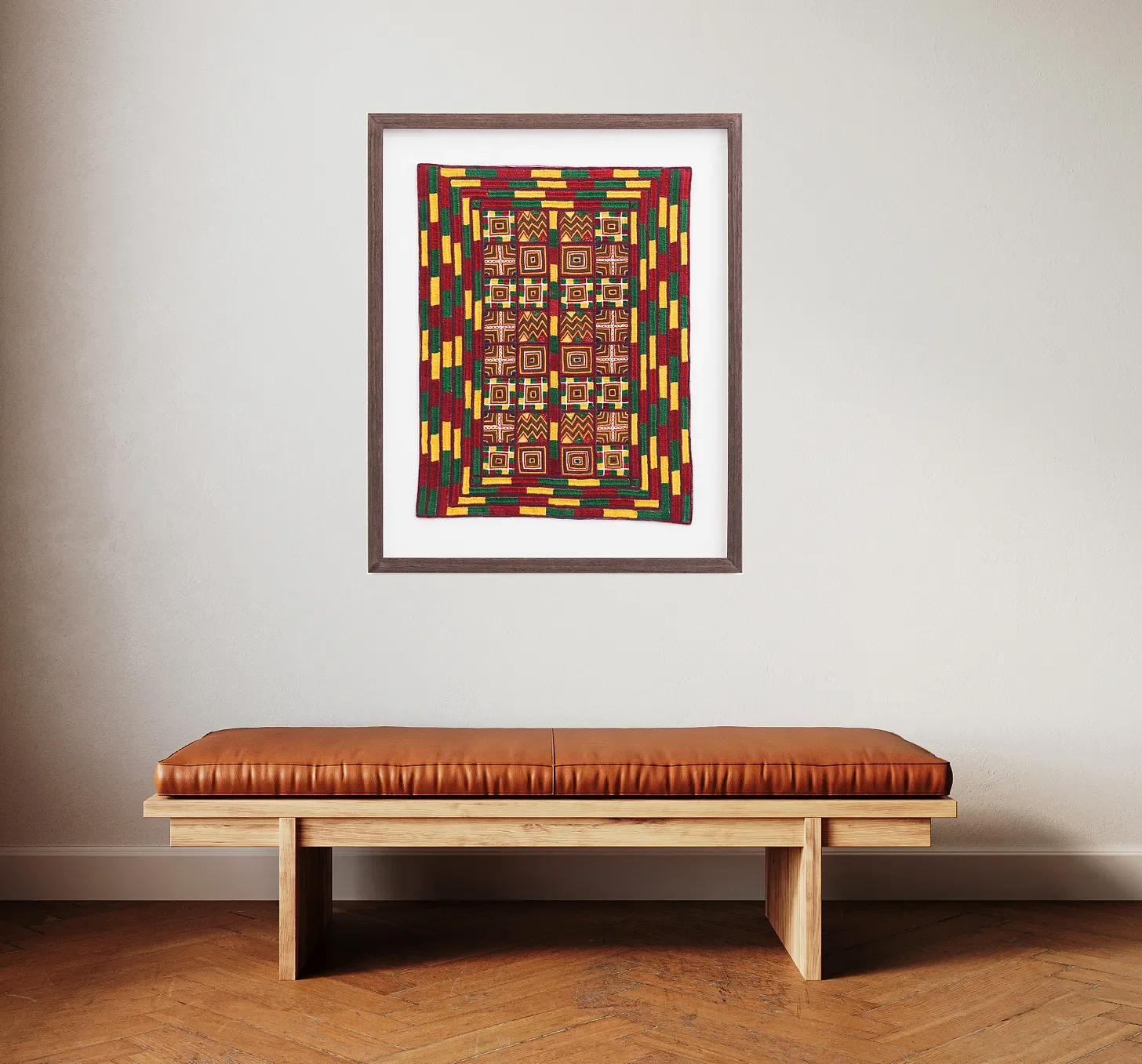
So much of our time in the craft sector has been spent thinking - and experiencing - how fragile craft really is. We’ve witnessed how a craft that exists so vividly in one generation can almost disappear in the next. How visual languages, techniques, and ways of making can fade simply because there isn’t enough support for them to continue.
Lambadi embroidery - the craft featured in our collection of fine art prints from Porgai Artisans - was once one of those crafts which faced the peril of extinction.
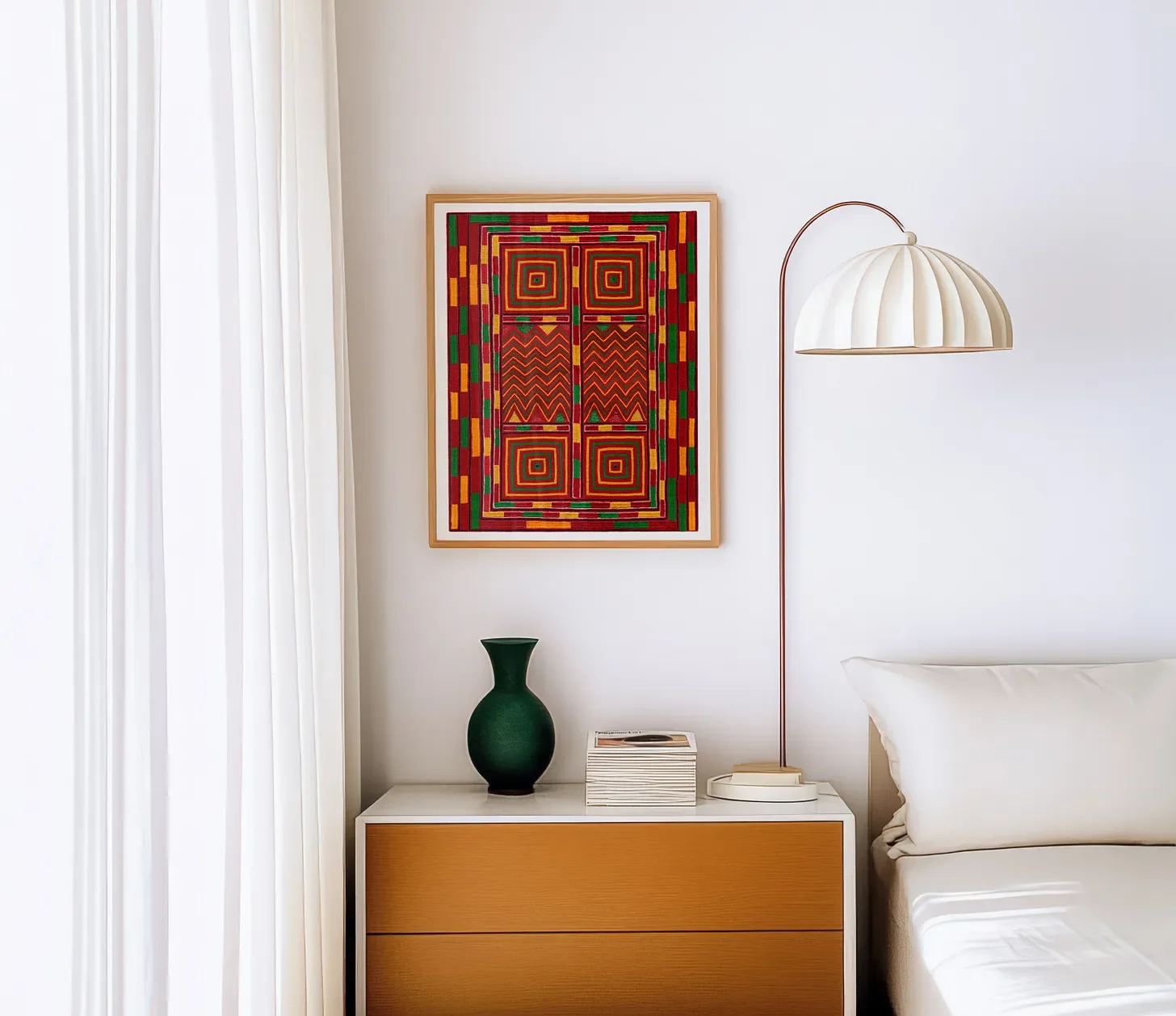
It comes from the Lambadi (or Banjara) communities of India, and the first time you encounter it, it doesn’t feel like embroidery in the way you might expect. It’s denser, almost architectural. It feels like it’s built up rather than laid onto fabric. There are mirrors stitched into the surface, geometric patterns that repeat but never quite the same way twice, bold, rich colors that feel both intuitive and deliberate.
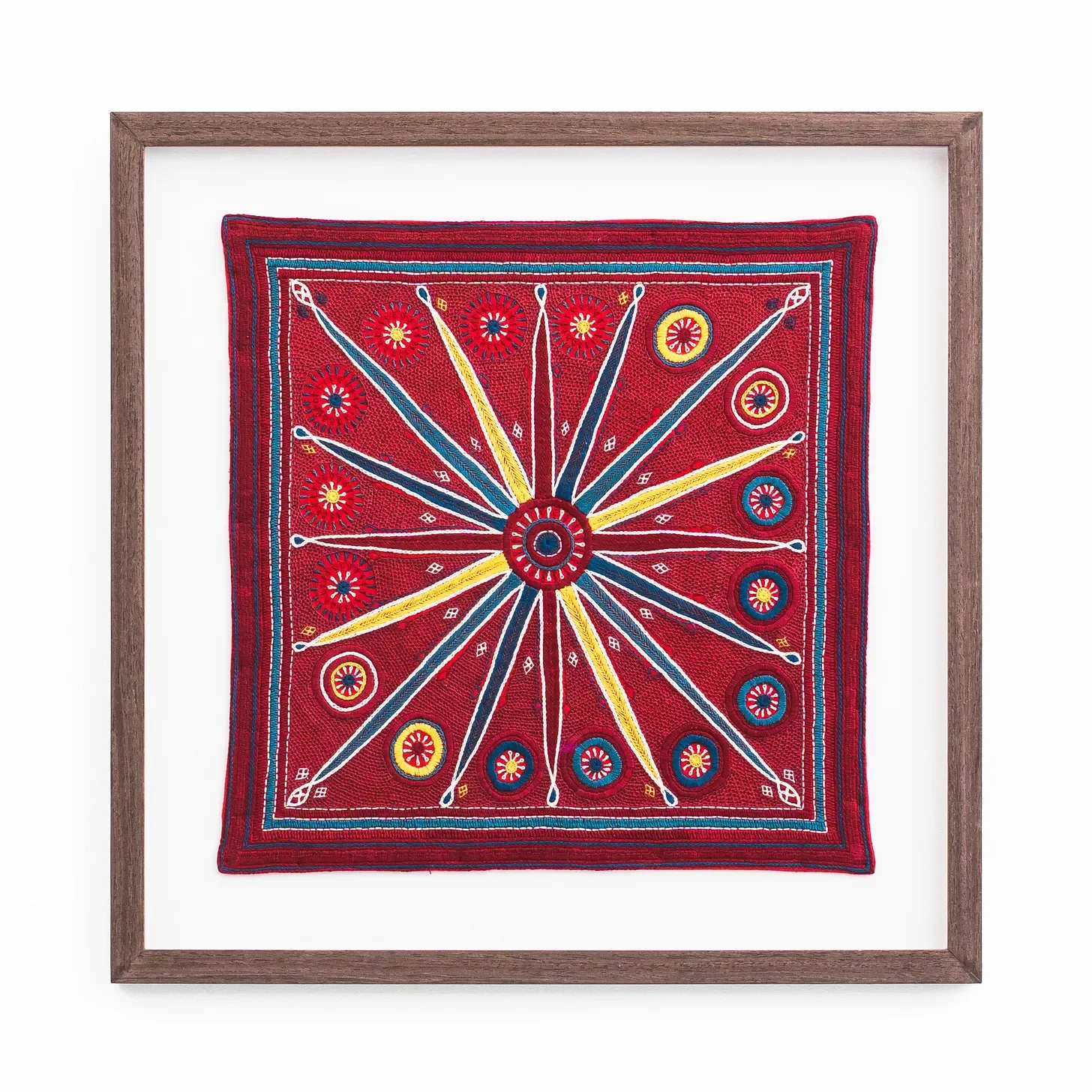
The craft of Lambadi embroidery wasn’t something made for galleries or collectors. It was showcased on the body. Women embroidered their own garments and the work was passed down quietly, from one generation to the next, not through formal training but through doing. Watching. Repeating.
And then, like so many traditional crafts, it almost disappeared.
As industrial textiles became cheaper and more accessible, and as economic pressures shifted what was viable work, fewer artisans could afford to spend time on embroidery. What had once been part of daily life slowly became unsustainable.
In 2006, social activist V. Shanti founded Porgai Artisans with the aim of creating sustainable livelihoods for Lambadi (Banjara) women through their traditional embroidery. What began as a small initiative to support a handful of artisans has grown into a collective that both preserves the craft and provides consistent income to the women who practice it.
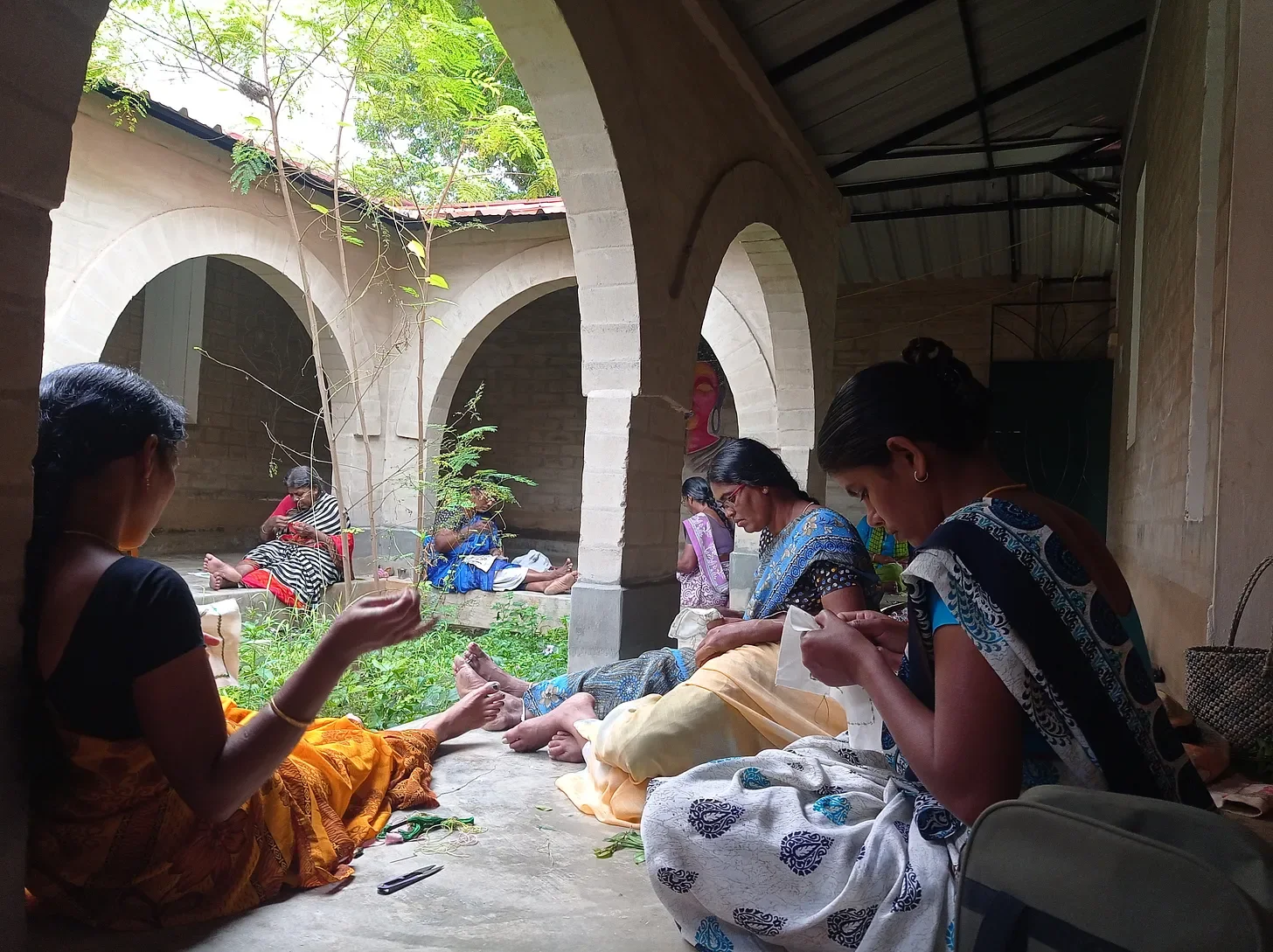
What drew us to Porgai wasn’t that their work is rooted in nostalgia. It was its commitment to building a sustainable future for the craft of Lambadi embroidery.
They work directly with Lambadi women artisans, creating a structure where the embroidery can continue to exist as a livelihood. Not as something preserved behind glass, but as something still practiced, still evolving, still in the hands of the people it belongs to.
We came across a vintage Lambadi weaving online and absolutely fell in love with it. It sent us searching for who was still practicing this kind of embroidery, a trail that eventually led to Porgai Artisans Association in Tamil Nadu’s Sittilingi Valley. What struck me about their originals was this unexpected mid-century modern sensibility.
Bold, geometric, instinct-driven compositions that reminded me of Calder tapestries. The kind of work that would hold its own on the wall of any modern home. And the graphic strength of the designs made it immediately clear that they would translate beautifully into prints.
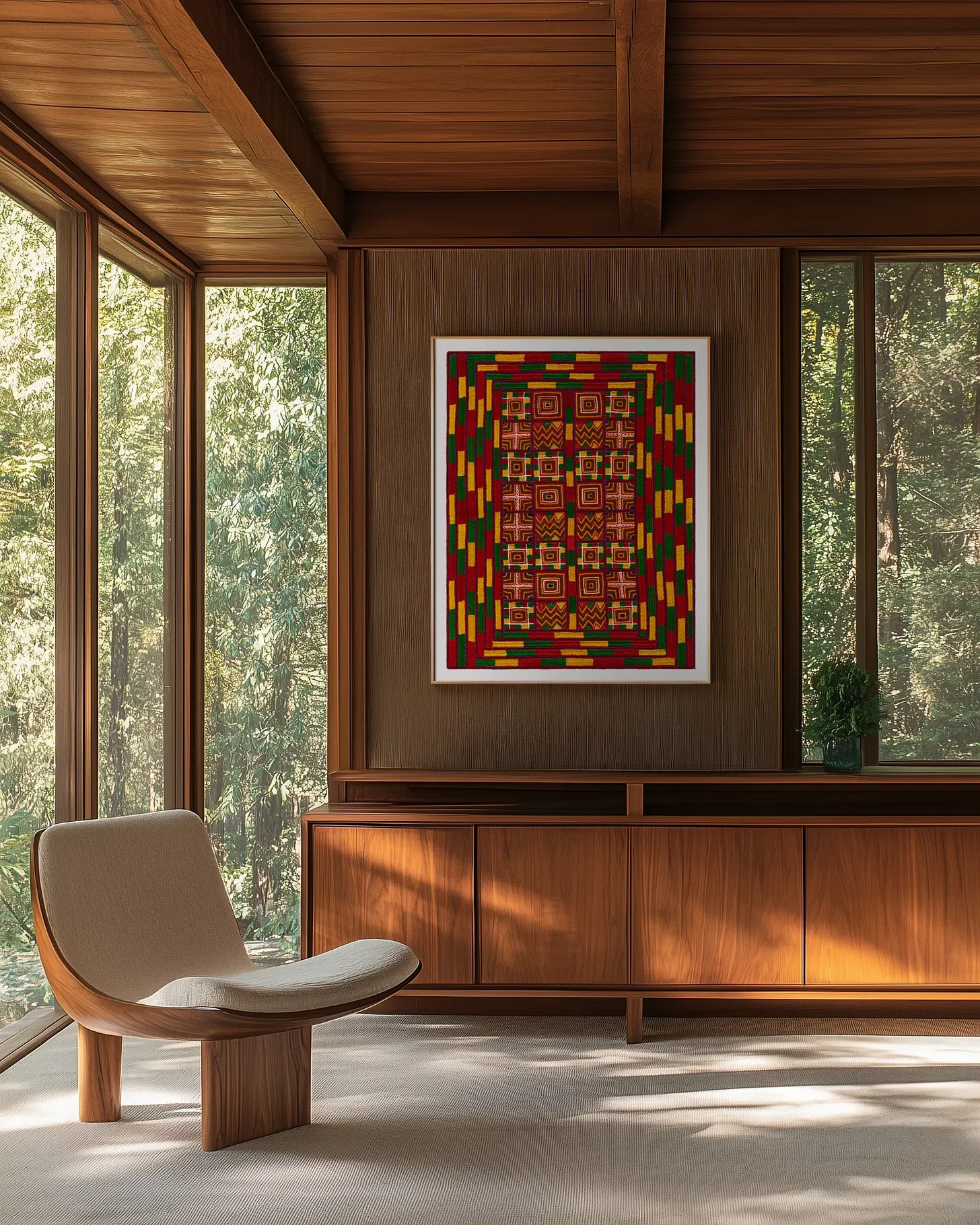
As we became stewards of preserving the art of Lambadi embroidery albeit through a new medium, we kept coming back to one question:
What is the role of a print in a world where craft can disappear so easily?
It’s of course easy to think of fine art prints as secondary. As simple facsimiles. But for us, the print is another way for the work to exist - another way for it to be seen, experienced and shared with the world in a way that exposes both its beauty and the importance of its preservation.
Because the more visible something is, the harder it is for it to disappear.
This is also why we’ve been intentional about how we structure value around these pieces. At Proud Mary, the prints aren’t just inspired by Lambadi embroidery - they are direct limited editions reproductions of that work. And that connection doesn’t end once the piece is made.
Through our royalties model, each print continues to generate income for the artisans and communities connected to the work. Not as a one-time exchange, but as something ongoing. Something that can be reinvested back into the craft in a very real way.
We think a lot about what it means to support craft beyond storytelling. Because it’s not enough to appreciate something. For it to survive, it has to be economically viable. It has to support the people who carry it forward.
In that sense, the print becomes more than a reproduction. It becomes part of the ecosystem that allows the original craft to keep existing. And making sure that what has been passed down - often against the odds - doesn’t stop with us.
The collection from Porgai Artisans - original and limited edition fine art prints - are available on ProudMary.co
xx, Harper & Benita
