AI Isn't Coming For Artisans
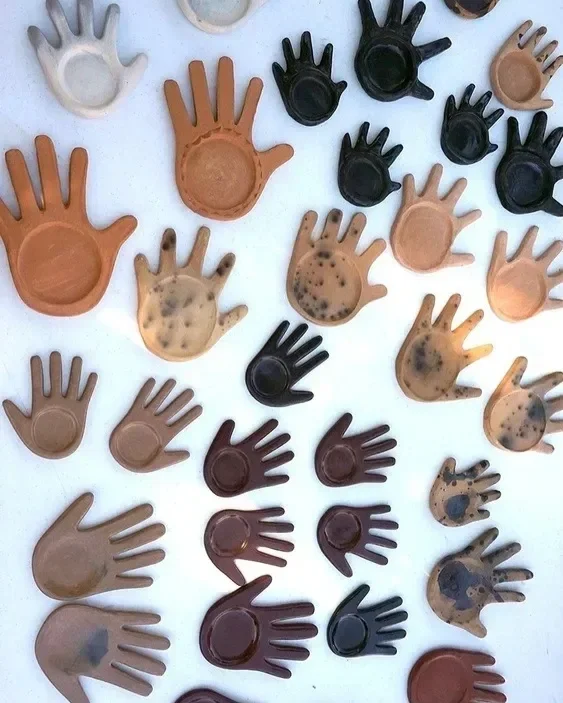
Like so many, we too believe that AI can be scary.
And not in an abstract, sci-fi way. But in the very real, practical sense of how quickly it can do things that used to take people - skilled people - years to learn. It can write, design, strategize, merchandise, brand. It can generate in seconds what once required teams, budgets, and time.
In the world of retail and design, that’s destabilizing. And it raises an obvious question:
What happens to craft in a world where so much can be made without hands? Without years of institutional, generational knowledge?
For a while, the answer felt bleak.
If AI can generate beautiful patterns, compelling stories, even entire brand identities, what happens to the artisans? To the slow work? To the human knowledge embedded in materials and making?
But recently, something has started to shift. A kind of equilibrium is emerging.
As a well-researched and articulated piece in the Financial Times noted, the rise of AI may actually be clarifying the value of what is truly handmade. Because the work of craft cannot be replicated by algorithms, only approximated.
As the average becomes easier to produce, the exceptional becomes easier to recognize.
Which leads us to a more radical thought:
Maybe AI isn’t coming for artisans.
It’s coming for the brands pretending to work with them.
There are many brands and organizations operating in the “artisan” space that aren’t deeply embedded in it. They don’t have real relationships with makers. They don’t understand the nuances of production. They aren’t differentiated beyond the aesthetic.
They’ve been trading on the idea of craft—the look, the language, the story—without being rooted in the work itself. And AI is going to expose that because AI is exceptionally good at the surface layer.
It can build your brand strategy.
Write your story.
Design your logo.
Map your assortment.
Model your P&L.
Generate your campaigns.
It takes what already exists and recombines it - beautifully, efficiently, convincingly.
But here’s what AI cannot do.
It cannot walk into a dim textile office in India, notice a strange and beautiful chair in the corner, and know who made it - or how to have it made again.
It cannot specify the exact thread needed to achieve a particular weight in a handloom textile.
It cannot arrive in a village in Morocco and understand what can be made there, at what quality, at what scale - and, more importantly, be trusted enough by the people there to even begin that conversation.
That knowledge doesn’t live in a database. It was never written down.
It lives in relationships.
In years of showing up.
In trial and error.
In making.
The best outcomes we’ve been part of were never perfectly planned. They came from trying things, learning what didn’t work, editing, and continuing. Often, we know what doesn’t feel right long before we know what does.
And more often than not, the indirect path—the longer way around, the detour—is where you find the best source, the best idea, the best partner.
AI optimizes.
It takes the most direct route.
It does not wander.
But in this work, wandering is everything.
