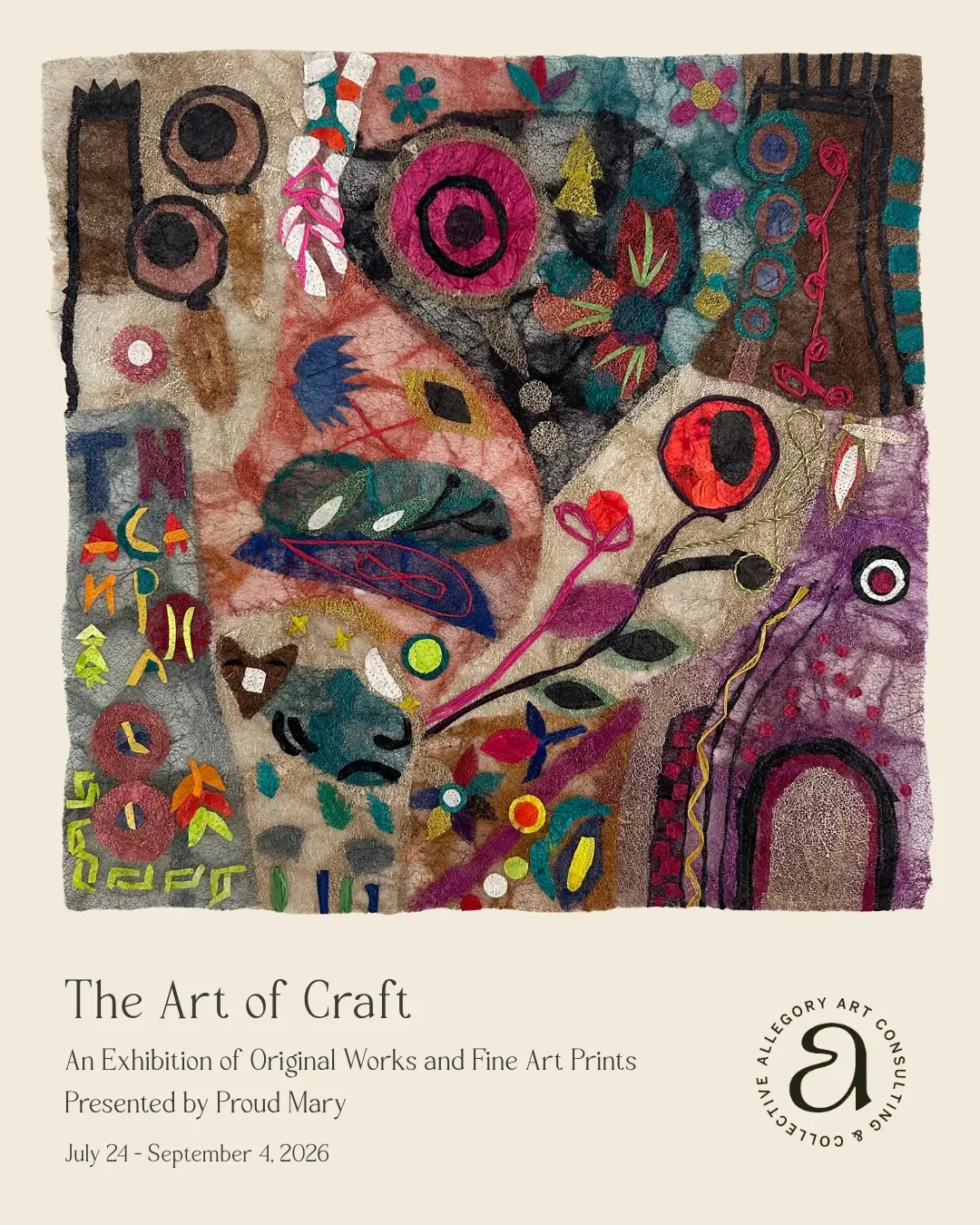
The Art of Leaving Something Alive
More on our upcoming collection with Tanana Madagascar
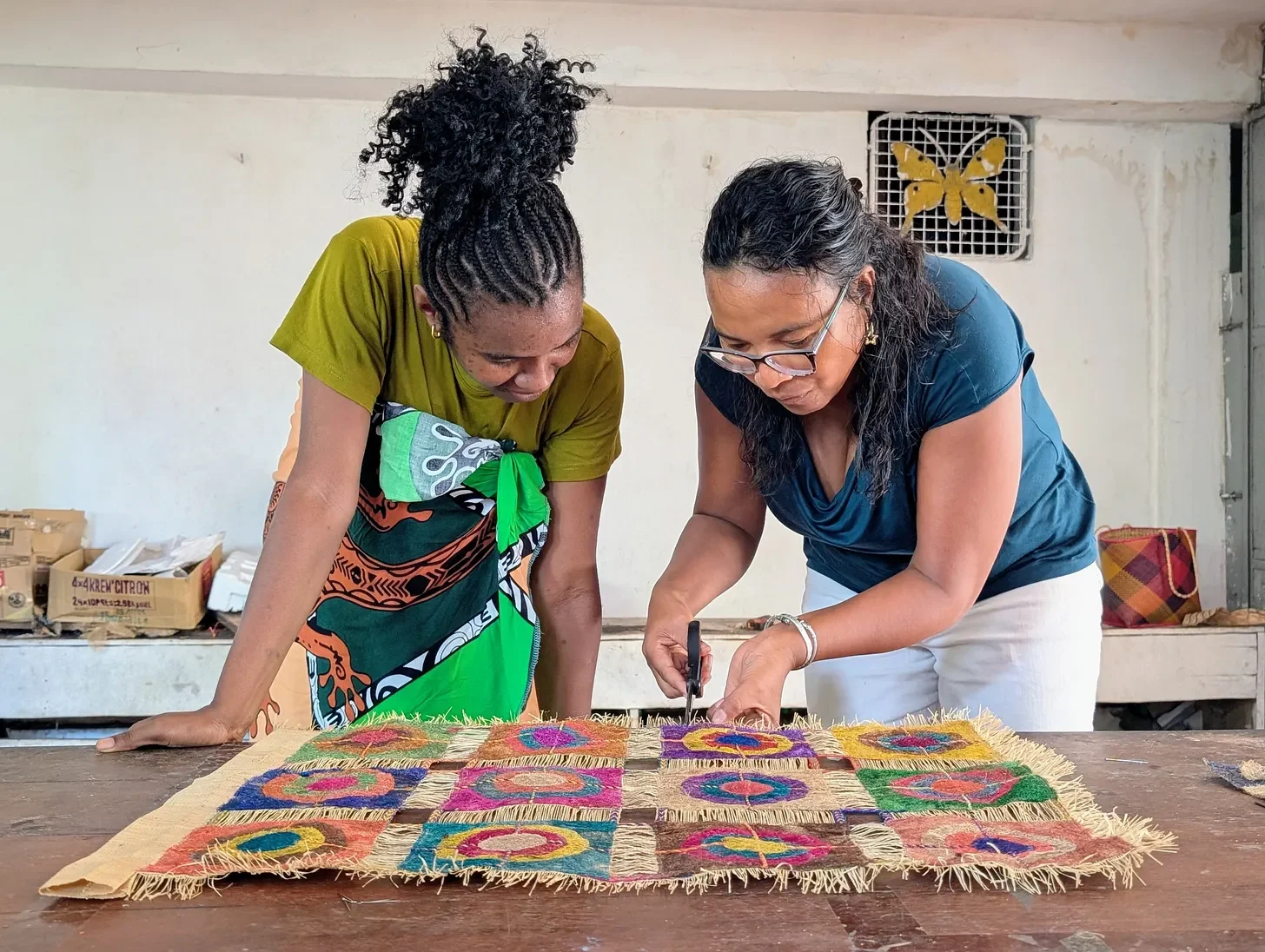
Tanana Madagascar Lead Artisan Lalaina Raharindimby and skilled raffia weaver Sabine admire a recently completed commission for Proud Mary at the artisans workshop in northeastern Madagascar. (Photo: Rachel Kramer/CPALI)
It’s easy to think of a work of textile art as the end of a process. A culmination, an end point. Yet our latest collection from Tanana Madagascar is something altogether different.
In this collection, each piece is beautiful visual evidence of a living, growing ecosystem. And each piece represents not the end of a process, but the continuation of a relationship between the forest, the artisan - and the market that sustains them both.
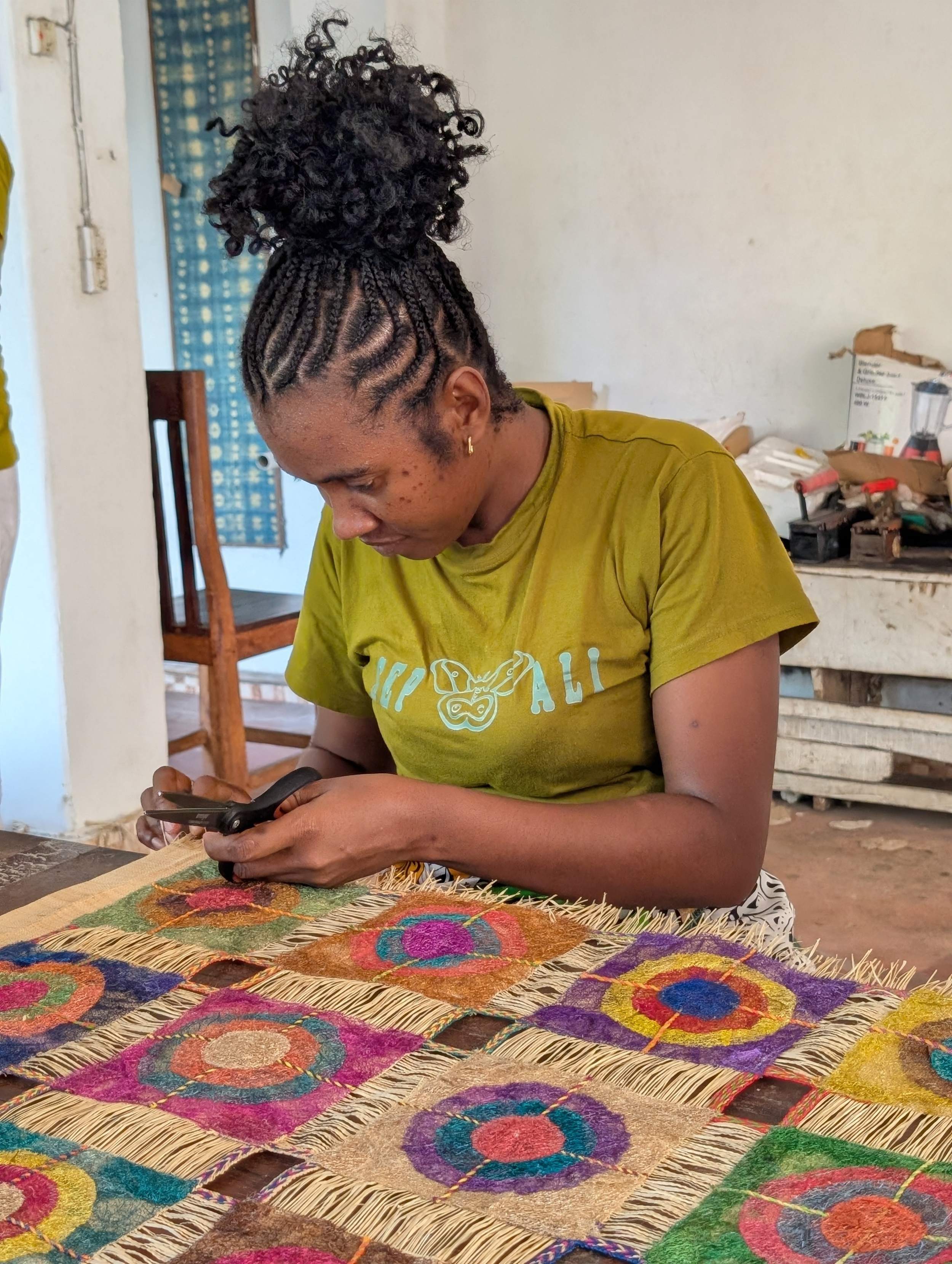
‘Miaraka’ in progress. Created by artists Beatrice and Cidonie. (Photo: Rachel Kramer/CPALI)
Unlike cultivated silk, the wild silk in this collection cannot simply be farmed. It begins in the rainforest, where wild silkworms feed exclusively on endemic host plants found nowhere else on Earth. The silk exists because an entire ecosystem exists first.
That ecosystem is supported by an equally remarkable collaboration. CPALI (Conservation through Poverty Alleviation International), together with its Madagascar-based social enterprise, SEPALI Madagascar, works with local farmers to propagate the endemic host plants that wild silkworms depend upon, helping restore and protect the rainforest. Tanana’s artisans then transform that wild silk into extraordinary textile art. As the silk becomes more valuable, the forest itself becomes more valuable standing than cut down.
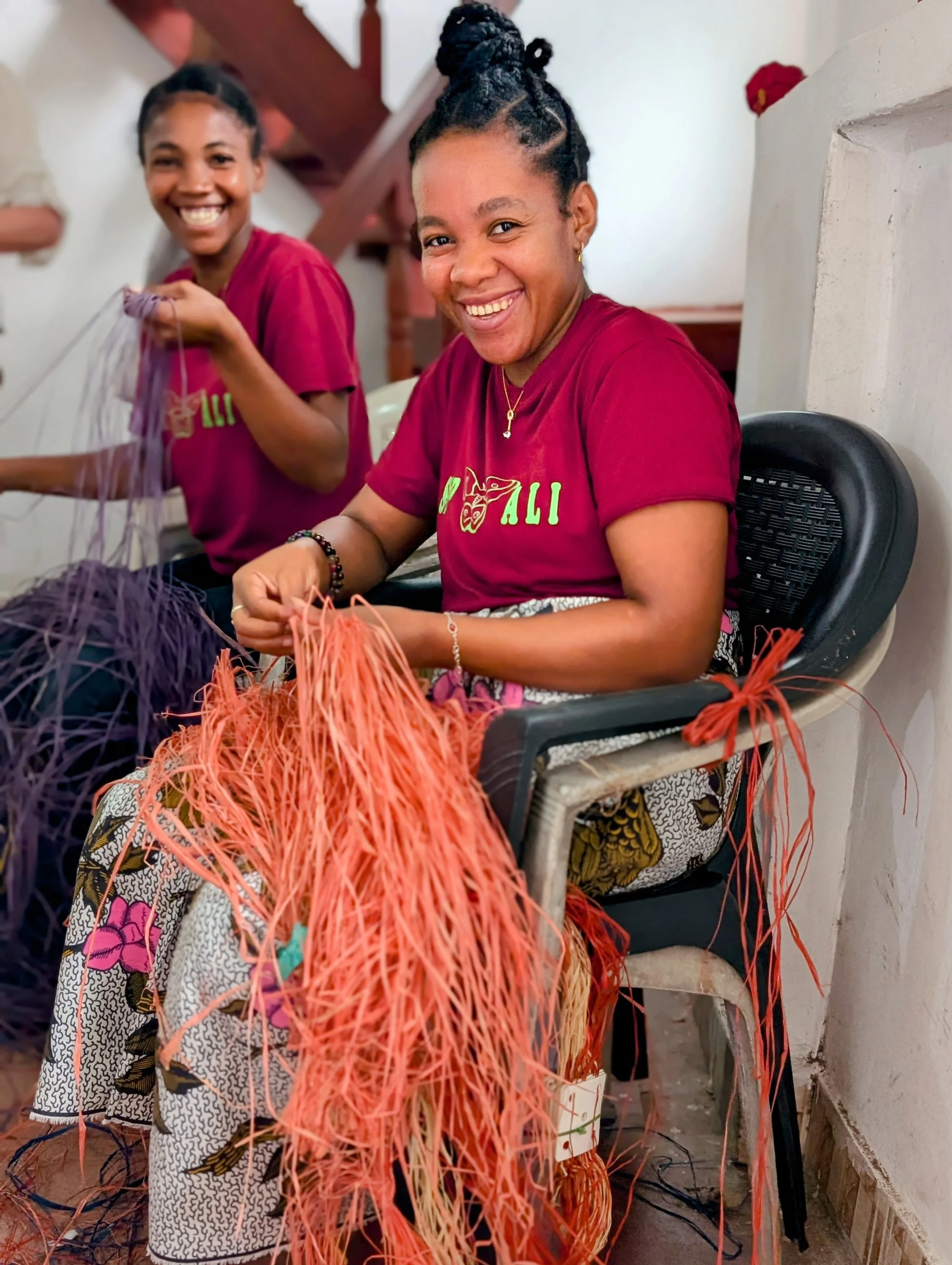
Tanana Madagscar artisans Beatrice and Fabiola prepare freshly dyed raffia strands for tablet weaving, a specialty of the group. Beatrice also serves as a mentor in the group’s village-based artisan training program. The program is teaching 90 local women new skills, including tablet weaving raffia, loom weaving raffia, wild silk collage, reed weaving, and coiled raffia. As skills are mastered, the village-based trainees will contribute to the Tanana Madagascar line. (Photo: Rachel Kramer/CPALI)
In a world where economic systems have too often rewarded the conversion of forests into something else, Tanana, CPALI and SEPALI offer a different vision - an economy that exists because of the forest - not at its expense.
The more we learned about this work, the more we realized it represents something much larger than a beautiful body of textile art. It represents a different definition of abundance.
We’ve long shared how our economy often measures success by what we extract. We remove resources from the earth. We manufacture products. We sell them. Success is so often measured by what we’ve taken and transformed.
But this silk tells a different story. Its value depends upon leaving something alive.
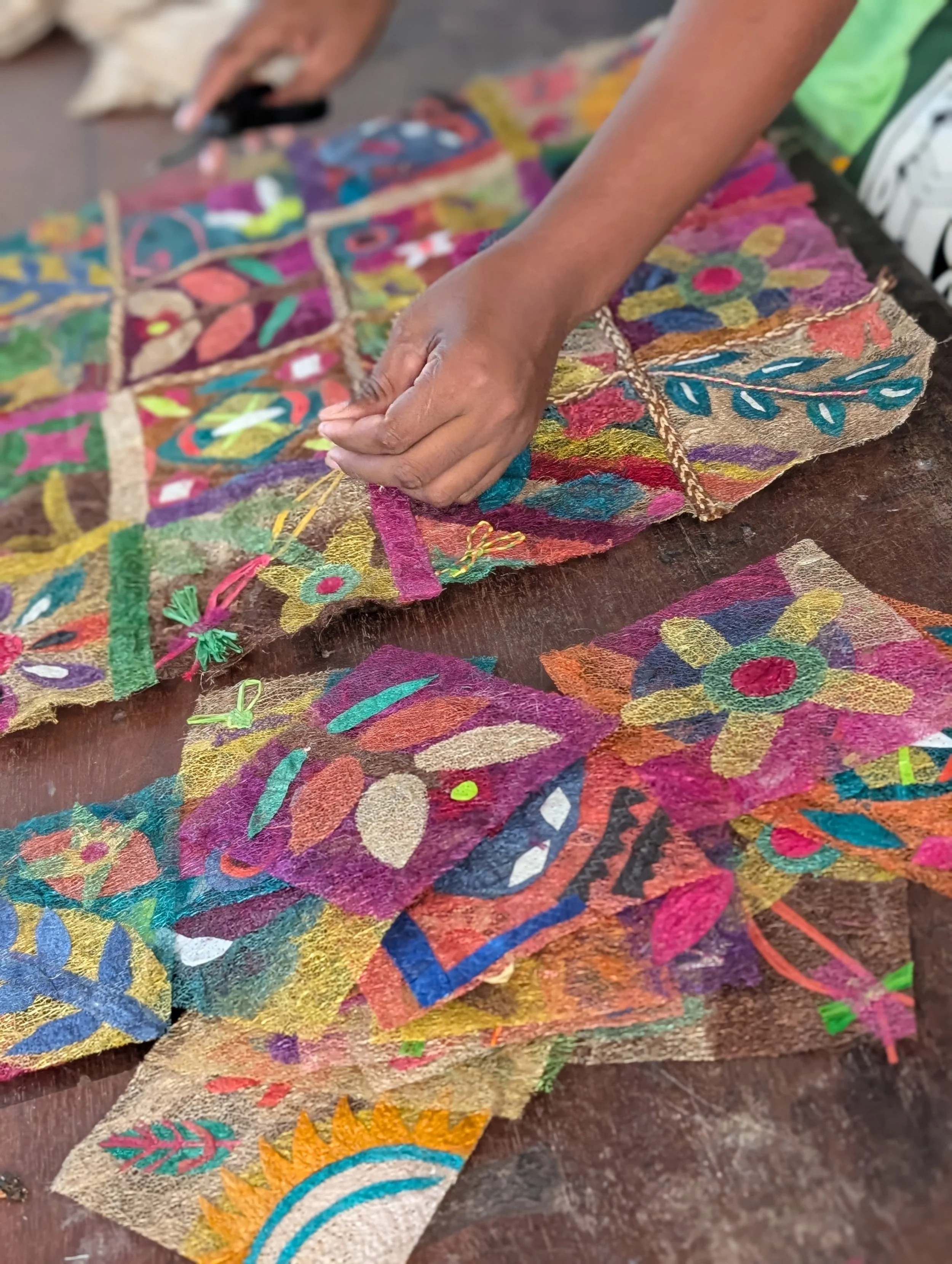
‘Zaridaina’ in process. Created by artists Delphine, Fabiolah, and Lalaina. (Photo: Rachel Kramer/CPALI)
It’s often said that the best works of art don’t end with themselves. They inspire new artists. They shape culture. They change how we see the world. Perhaps, in another sense, the best art creates more than it consumes.
With the launch of the Tanana collection, we’d like to think that idea can be taken a step further - a step beyond the economic model we’re advancing with our royalties model. Our model at Proud Mary has always been built on the belief that a single work of art can continue generating economic value for the artist long after it leaves the studio.
But what if art can create ecological value as well? The story behind this silk suggests that it can. As the silk from Tanana flourishes, so too does the farmer, the forest, the silkworm, and the artisan. Every participant in the system becomes more valuable when the others thrive.
That’s a beautiful way to think about an economy.
And if it’s possible for a piece of silk, perhaps it’s possible for the markets we choose to build around art as well.
The Tanana collection launches at The Art of Craft show on July 23rd at The Allegory Art Collective in Charleston, South Carolina.